Growing leaf lettuce is one of the most rewarding things you can do in a garden or on a patio. It's fast, it's forgiving, and if you set it up right, you'll be cutting fresh leaves for weeks from the same plants. This guide walks you through the whole process, from picking a variety to storing your first harvest, with the specific details you actually need to get a reliable crop.
How to Grow Leaf Lettuce: Easy Loose-Leaf Guide
Marcus Holloway
24 Mar 2026
Choosing the right leaf lettuce type
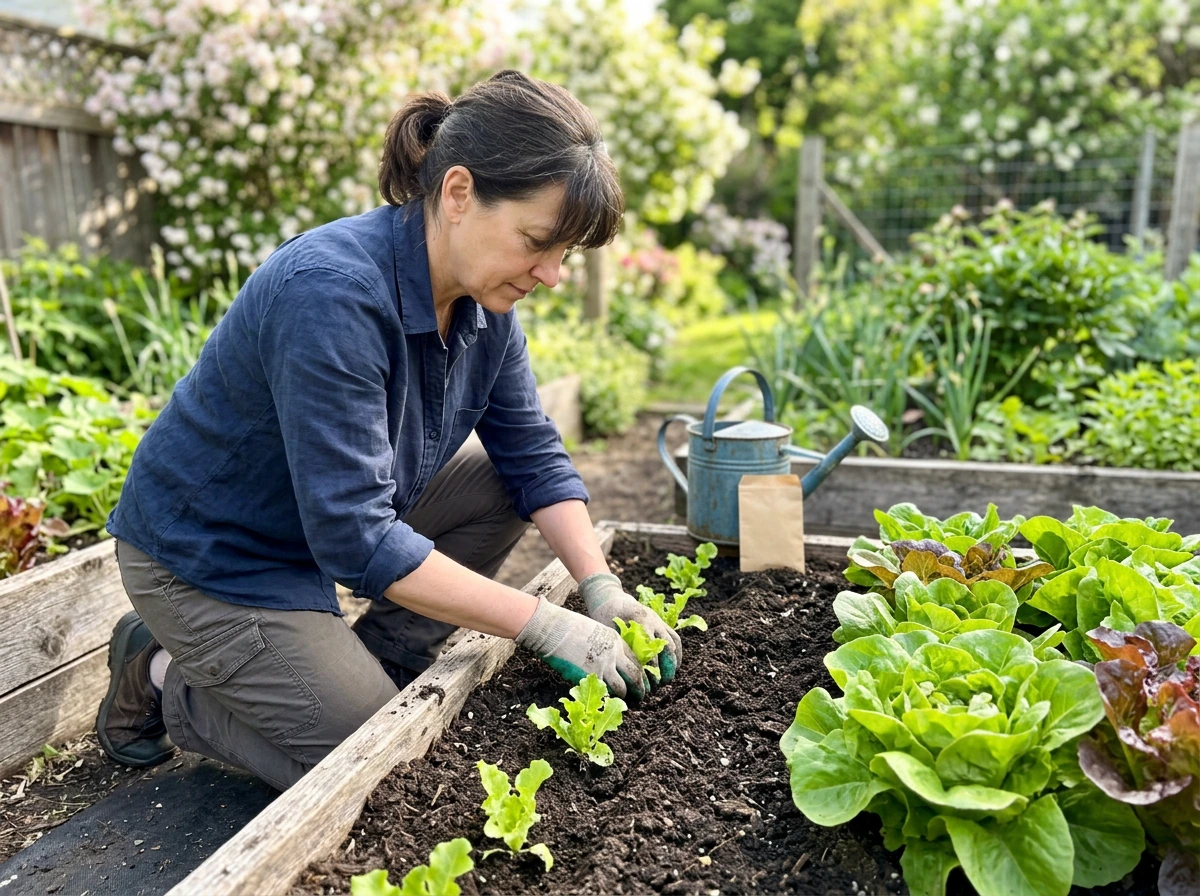
Leaf lettuce (Lactuca sativa) is the loose-leaf category, meaning it doesn't form a tight head the way iceberg or butterhead types do. Instead, the leaves grow outward from a central base, which is exactly what makes cut-and-come-again harvesting possible. If you're searching for green leaf lettuce specifically, you're in this category.
For green loose-leaf varieties, 'Green Salad Bowl' (sometimes just listed as 'Salad Bowl') is one of the best picks. It produces apple-green, oak-leaf-shaped leaves in a loose rosette, matures in roughly 45 to 60 days, and has genuine heat tolerance that keeps it productive into early and mid-summer when other lettuce types give up and bolt. That heat tolerance is a real practical advantage, especially if you're growing through a warm spring. Other reliable green loose-leaf options include 'Black-Seeded Simpson,' 'Grand Rapids,' and 'Slobolt,' all of which are widely available and easy to grow.
If you want to explore other types like <anchor>red leaf lettuce</anchor> or head lettuce, those are worth a separate look. But for this guide, we're focused on green loose-leaf: the most beginner-friendly, fastest, and most cut-and-come-again-capable category. how to plant and grow lettuce
Site, soil, and container setup
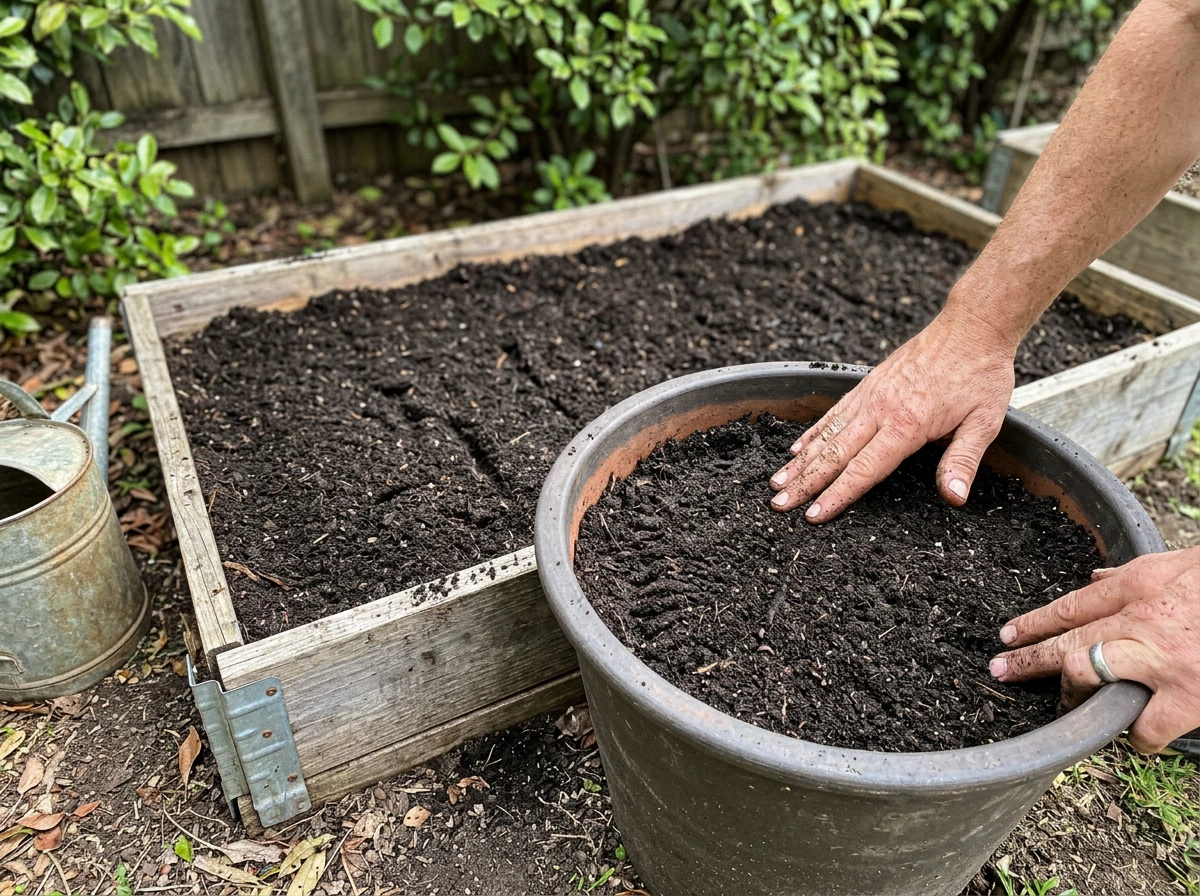
Leaf lettuce is flexible about where it grows. You can put it in a raised bed, a traditional garden row, or a container on a balcony. The key requirements are the same across all setups: good drainage, loose fertile soil, and the right pH.
Aim for a soil pH between 6.0 and 7.0. The sweet spot is around 6.5, where nutrient availability is ideal for lettuce. If you're working with native soil, a basic soil test (available cheaply at most garden centers or through your county extension office) will tell you where you stand. If the pH is off, lime brings it up and sulfur brings it down, but most decent garden soil or commercial potting mix is already close enough.
For in-ground or raised bed planting, work in a couple of inches of compost before sowing. Lettuce has shallow roots and benefits more from loose, well-amended topsoil than from deep digging. Make sure the bed drains well. Lettuce sitting in soggy soil is lettuce heading toward rot.
For containers, use at least a 1-gallon pot, with 12 to 18 inches of soil depth being the practical target for good root development and moisture retention. A standard 12-inch diameter pot or a window box works well. Fill with quality potting mix, not native soil, which compacts too easily in containers. Containers dry out faster than beds, so factor that into your watering routine from the start.
Sowing seeds and starting seedlings
You have two options: direct sow seeds where they'll grow, or start seedlings indoors and transplant. For leaf lettuce, direct sowing is simpler and works great. Lettuce seed is tiny and germinates quickly under the right conditions, so there's little reason to complicate it with indoor starts unless you're trying to get a very early jump on the season.
Sow seeds about 1/4 inch deep. Some sources say 1/4 to 1/2 inch, but shallower is better with lettuce since the seeds are small and need light to germinate well. Press the soil gently but firmly over the seeds after sowing so there's good seed-to-soil contact. Then water thoroughly.
Germination temperature matters a lot. Lettuce germinates best when soil temperature is around 60 to 70°F. It can still sprout at lower temps, just more slowly. Above 75°F, germination drops off sharply and becomes unreliable. If you're sowing in warm weather, shade the flat or seedbed until sprouts emerge, or pre-chill your seeds in the refrigerator for a day before sowing. In cool spring or fall conditions, you'll typically see sprouts within 7 to 10 days.
If you choose to start transplants indoors, start them 3 to 4 weeks before your last frost date and harden them off for about a week before moving them outside. Transplants give you a slight head start but aren't necessary for this crop.
Watering, fertilizing, and temperature needs
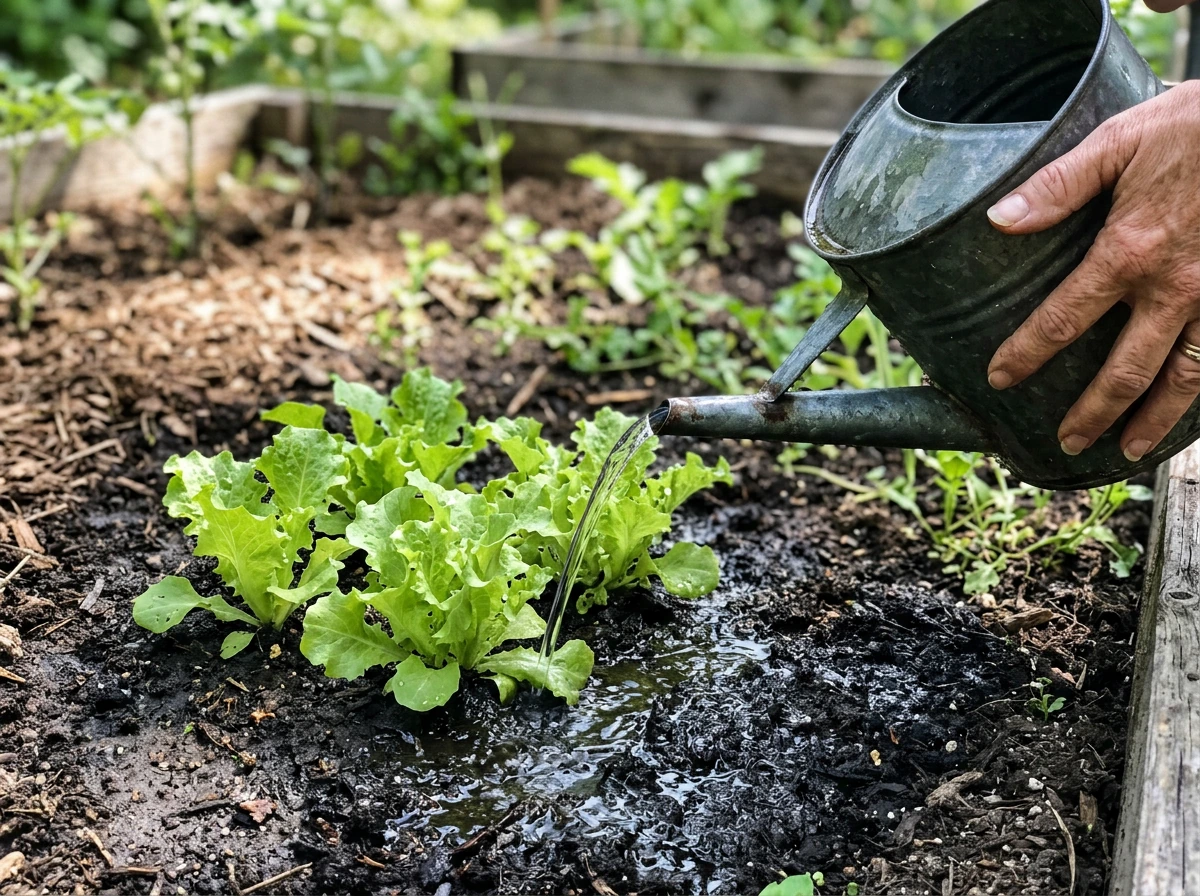
Leaf lettuce is about 95% water, so consistent moisture is non-negotiable. Water deeply when you water rather than giving light daily sprinkles. The goal is to keep the root zone consistently moist but never waterlogged. In most climates, that means watering every 2 to 3 days during cool weather and potentially every day during hot spells if you're growing in containers.
One important technique: try to water at the soil level rather than overhead. Wetting the foliage repeatedly invites rot and disease. Drip irrigation or a watering wand directed at the base of plants is ideal. If you're using overhead watering, do it in the morning so the leaves dry off quickly.
For fertilizing, lettuce is a light feeder but benefits from a consistent nitrogen supply to keep it producing tender green leaves. A balanced, slow-release fertilizer worked into the soil at planting time handles most of the nutrition. If your plants start looking pale or growth slows, a light liquid feed with a balanced liquid fertilizer or fish emulsion every 2 to 3 weeks keeps things moving. Don't over-fertilize, as too much nitrogen can make leaves bitter and soft.
Temperature is the most critical factor for leaf lettuce quality. The ideal growing range is 60 to 70°F. Below 45°F, growth slows significantly. Below about 28 to 32°F, unprotected plants will be damaged. On the hot end, once daytime temperatures consistently exceed 80°F, lettuce starts to bolt (send up a seed stalk), and the leaves turn bitter fast. Heat-tolerant varieties like 'Green Salad Bowl' buy you some extra time, but no loose-leaf variety thrives in summer heat.
To extend your growing window in either direction, row covers are one of the most practical tools available. Lightweight row covers (around 0.45 oz per square yard) act as insect barriers with about 90 to 95% light transmittance and provide roughly 2°F of frost protection. For harder cold protection down to around 20°F, heavier row cover fabrics are available. In summer heat, the same fabric or shade cloth keeps temperatures more manageable. You can leave lightweight row covers on lettuce from seeding all the way through harvest without removing them.
Light exposure and spacing for loose heads
Leaf lettuce needs about 6 hours of direct sun per day for best production. In hot climates or during late spring, afternoon shade actually improves quality by slowing bolting. Morning sun with afternoon shade is often the ideal position once temperatures start climbing.
Spacing matters more than most beginners expect. Crowded lettuce produces spindly, stressed plants that bolt faster and are more vulnerable to disease. Once seedlings develop 2 to 3 true leaves (the leaves that look like real lettuce leaves, not the first tiny seed leaves), thin them to 10 to 14 inches apart for loose-leaf types like 'Green Salad Bowl.' Yes, that feels like a lot of space, but each plant will spread out and produce many more leaves when it's not competing.
If you're doing a cut-and-come-again row for continuous harvests, you can sow more densely and treat it as a cut-once bed, harvesting when plants are young, or thin progressively by harvesting alternating plants as they size up. Either approach works; just don't leave plants permanently crowded at 2 to 3 inches apart past the early stage.
Pest and disease prevention and quick fixes
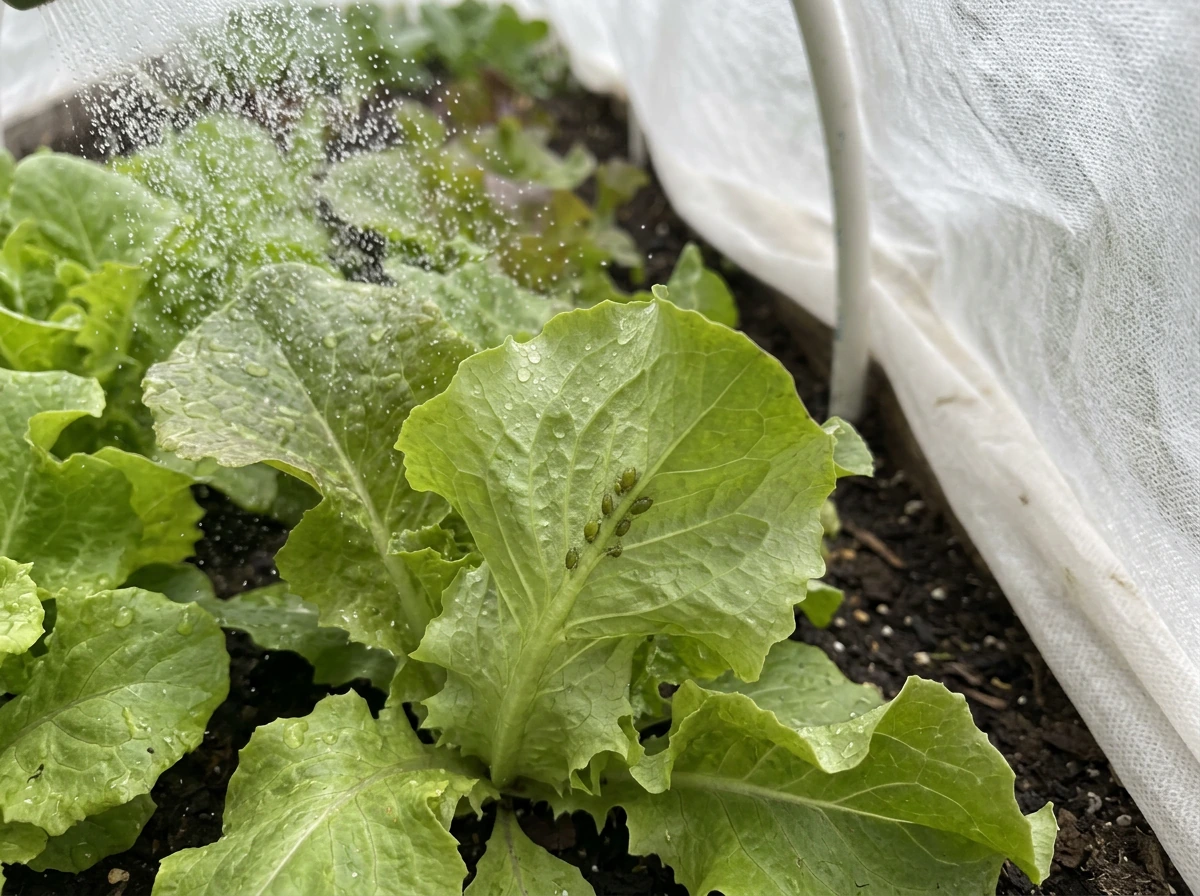
The most common pests you'll encounter on leaf lettuce are aphids and cutworms. Aphids cluster on undersides of leaves and new growth, sucking plant sap and causing distorted, yellowed leaves. Cutworms are soil-dwelling caterpillars that sever seedlings at the base overnight, leaving you with a mystery of fallen plants in the morning.
For aphids, a strong spray of water knocks most of them off. Lightweight row covers used from day one exclude them entirely, which is the easiest prevention strategy. If an infestation is established, insecticidal soap spray works quickly with minimal impact on the plant. For cutworms, if you lose seedlings and suspect them, dig carefully around the base of affected plants and sift the nearby soil. You'll often find the culprit curled up an inch or two down. Placing cardboard or plastic collars around transplant stems at planting time prevents most cutworm damage.
On the disease side, downy mildew is the main one to watch for, especially in cool, wet spring weather. It shows up as pale yellow patches on upper leaf surfaces with grayish-purple fuzzy growth underneath. Prevention is mostly about airflow and keeping foliage dry. Don't overcrowd plants, water at the base, and clean up any spent plant debris at the end of the season since mildew can overwinter in plant material.
Tipburn, which looks like brown, scorched edges on the inner leaves, is usually a heat and calcium uptake issue rather than a disease. If you see it, check whether temperatures are spiking and whether watering has been inconsistent. It's a signal to harvest soon and consider your timing for the next planting.
Harvesting cut-and-come-again and storage
Cut-and-come-again is the method that makes leaf lettuce so productive. Instead of pulling the whole plant, you harvest outer leaves while the center keeps growing and producing new ones. This can extend your harvest from a single planting by 4 to 6 weeks or more under good conditions.
- Wait until plants have at least 5 to 6 mature outer leaves, typically when they're 4 to 6 inches tall.
- Using clean scissors or your fingers, break or cut the outer leaves off about an inch above the soil line. Leave the inner 3 to 4 leaves and the growing center completely intact.
- Harvest no more than one-third of the plant's total leaf mass at one time to keep the plant healthy and productive.
- Return for another harvest in 7 to 14 days depending on growing conditions. Warm weather speeds regrowth; cool weather slows it.
- Once the plant starts sending up a central stalk and leaves taste bitter, it's bolting. Pull it out and direct sow a fresh succession planting.
For storage, refrigerate harvested leaves promptly. The target storage temperature is around 32°F with high humidity, which is what the produce drawer of most refrigerators provides. Before storing, spin the leaves dry in a salad spinner or pat them gently with a clean towel. Wet leaves rot quickly. Store them in a loosely sealed bag or container lined with a paper towel to absorb any remaining moisture. Properly stored, fresh-cut leaf lettuce stays crisp for 5 to 7 days.
One practical tip: harvest in the morning when leaves are fully hydrated and temperatures are cool. Morning-harvested lettuce stores noticeably better than lettuce cut in the heat of the afternoon.
Quick variety comparison for green loose-leaf lettuce
| Variety | Days to Maturity | Heat Tolerance | Best Use |
|---|---|---|---|
| Green Salad Bowl | 45–60 days | High | Cut-and-come-again, extended season |
| Black-Seeded Simpson | 45–50 days | Moderate | Early spring, fast harvests |
| Grand Rapids | 45–50 days | Moderate | Spring and fall, continuous cut |
| Slobolt | 48–55 days | High | Warm-weather planting, slow to bolt |
If you can only grow one green loose-leaf variety, 'Green Salad Bowl' is the most versatile choice. Its heat tolerance makes it useful across a longer window, and it performs well in both beds and containers. For the fastest possible harvest in cool spring conditions, 'Black-Seeded Simpson' gets you to the table a bit quicker.
Your next steps right now
If it's late March where you are, you're in a great window to direct sow leaf lettuce outdoors in most of the Northern Hemisphere, or to start transplants indoors in colder zones. Check your soil temperature (a $10 probe thermometer is worth it), confirm your pH is in the 6.0 to 7.0 range, and get seeds in the ground or container within the next week or two. Set up a simple sowing calendar with succession plantings every 2 to 3 weeks so you're not drowning in lettuce all at once. And if you want to dig into <anchor>growing head lettuce</anchor> or red leaf varieties after you've got this dialed in, those are natural next steps that build on everything covered here.
FAQ
How do I keep leaf lettuce from bolting in warm weather?
Start with a heat-tolerant loose-leaf variety, aim for morning sun and afternoon shade once temperatures climb, and use row cover or shade cloth to reduce peak leaf temperatures. Also avoid letting the soil swing between dry and very wet, since stress accelerates bolting.
What’s the best way to do succession planting without ending up with too much lettuce?
Plant smaller batches every 2 to 3 weeks, and adjust the batch size to your eating rate. If you harvest regularly using cut-and-come-again, you can often extend the life of each planting so you need fewer total sowings.
How thin should I be, and what if I don’t thin at all?
Thin to 10 to 14 inches apart for loose-leaf types once seedlings have 2 to 3 true leaves. Skipping thinning usually leads to spindly plants, faster bolting, and higher disease risk due to poor airflow and competition.
Can I grow leaf lettuce indoors year-round?
Yes, but you must manage light and temperature. Use a bright grow light to mimic at least 6 hours of sun, keep conditions closer to the 60 to 70°F range, and water by checking the root zone moisture because indoor containers dry out faster than beds.
Why are my lettuce leaves bitter or tough?
The most common causes are heat stress, inconsistent watering, and overfeeding nitrogen. Harvest when leaves are young, keep watering steady at the root zone, and if you notice pale growth turning dark and soft, reduce fertilizer and prioritize balanced, light feeding.
My seeds sprouted but seedlings keep collapsing. What should I check first?
This often points to cutworms or overly wet soil. Check for soil contact damage at the base, avoid keeping the seedbed waterlogged, and consider collars at planting time for future batches. If foliage stays wet overnight, improve airflow and water at the soil level.
How do I tell tipburn from a disease problem?
Tipburn shows as brown, scorched edges on inner leaves and is usually linked to heat spikes and uneven calcium uptake from inconsistent moisture. Downy mildew typically causes yellow patches with gray-purple growth underneath, so look for that specific fuzzy pattern if you suspect a disease.
Should I harvest outer leaves every time, or can I cut the whole plant?
For maximum productivity, keep taking the outer leaves while the center stays intact. Cutting everything at once is possible, but it ends the ongoing regrowth cycle. If plants start getting too crowded, do a final full harvest rather than repeatedly removing small outer leaves.
What’s the safest harvest height and technique to avoid damaging the plant?
Harvest outer leaves when they’re large enough to eat, and use clean hands or shears to cut close to the base of each leaf without ripping the crown. Damaging the crown can slow regrowth and increase the chance of rot.
How should I store leaf lettuce to keep it crisp longer?
Refrigerate quickly at around 32°F, dry the leaves first (spin or pat gently), and store in a loosely sealed container with a paper towel to absorb moisture. Keep it away from produce that releases lots of ethylene, and refresh the paper towel if it becomes damp.
Do row covers affect pollinators or beneficial insects?
Leaf lettuce is typically grown for leaves rather than flowers, so pollinator impact is usually minimal. Row covers exclude aphids and also help prevent insect damage, but if you ever intentionally let lettuce go to seed, you would need to remove covers to allow pollination.