Lettuce is one of the easiest and most rewarding crops you can grow, and if you start today (late March is perfect timing in most of the country), you can be picking fresh leaves within 4 to 6 weeks. The full process from seed to harvest is straightforward once you know the handful of things lettuce actually cares about: cool temperatures, consistent moisture, and light. Here is everything you need to get it in the ground, keep it healthy, and harvest it in a way that keeps the plant producing for weeks.
How to Plant and Grow Lettuce: Step-by-Step Guide
Marcus Holloway
24 Mar 2026
Pick Your Lettuce Type First (Leaf Lettuce Is the Best Starting Point)
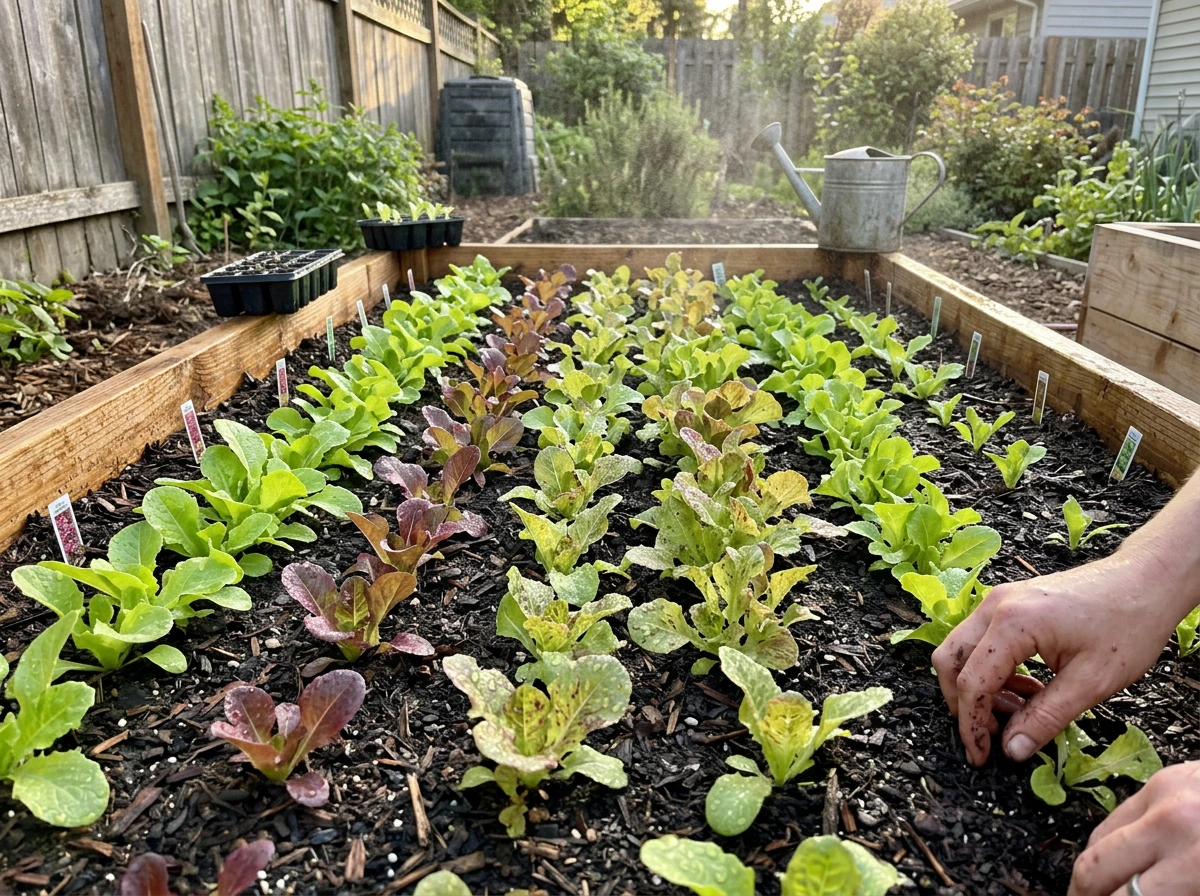
There are four main categories of lettuce: loose-leaf, butterhead (also called Boston or Bibb), romaine (cos), and crisphead (iceberg). For most home gardeners, loose-leaf lettuce is the obvious first choice. It matures faster than other types, tolerates a wider range of conditions, and lets you harvest a few leaves at a time over a long period rather than waiting for a single head. If you want to explore other types, If you want to explore other types, check out the dedicated guides on growing head lettuce and growing romaine or how to grow garden lettuce on this site.
For leaf lettuce specifically, popular varieties include Black-Seeded Simpson, Red Sails, and Oak Leaf. Buttercrunch (a butterhead type) takes about 65 days to full maturity, while Giant Caesar Romaine runs closer to 70 days. Loose-leaf types often give you a first harvest in 30 to 45 days from seeding. If you want a mix of colors and textures, look for a pre-mixed 'mesclun' or 'salad blend' packet, which typically includes several leaf types sown together. how to grow leaf lettuce
Red leaf lettuce is also a great option if you want variety in your bowl. It grows exactly like green leaf lettuce and tolerates similar conditions. There is a full guide on [growing red leaf lettuce](/garden-lettuce-varieties/how-to-grow-red-leaf-lettuce) elsewhere on this site if you want to dig deeper into that type.
When and Where to Plant
Lettuce is a cool-season crop. It grows best at daytime temperatures around 60 to 65°F and nighttime temps between 45 and 55°F. It can handle a light frost, which is why early spring planting works so well. Seed germination is best when soil temperature is in the 60 to 80°F range. Above about 75 to 86°F, germination slows dramatically or stops altogether, so there is a real window here and you want to hit it.
For spring planting, the window in most mid-Atlantic and mid-latitude regions runs from mid-March through late April. If you are reading this on or around March 24, 2026, you are right in that window. In cooler climates farther north, wait until the last frost date is close or use row covers to buffer temperature swings. Just know that row covers can raise internal temperature by 5 to 15°F above outside air, so vent them or pull them back on warm days to avoid cooking your seedlings.
Choose a site with full sun in spring. As temperatures warm later in the season, some afternoon shade actually helps extend your harvest window by slowing bolting. Avoid spots with poor drainage or standing water, as wet soil and leaf wetness promote disease, particularly downy mildew.
How to Plant Lettuce: Seeds vs. Transplants
Direct Seeding
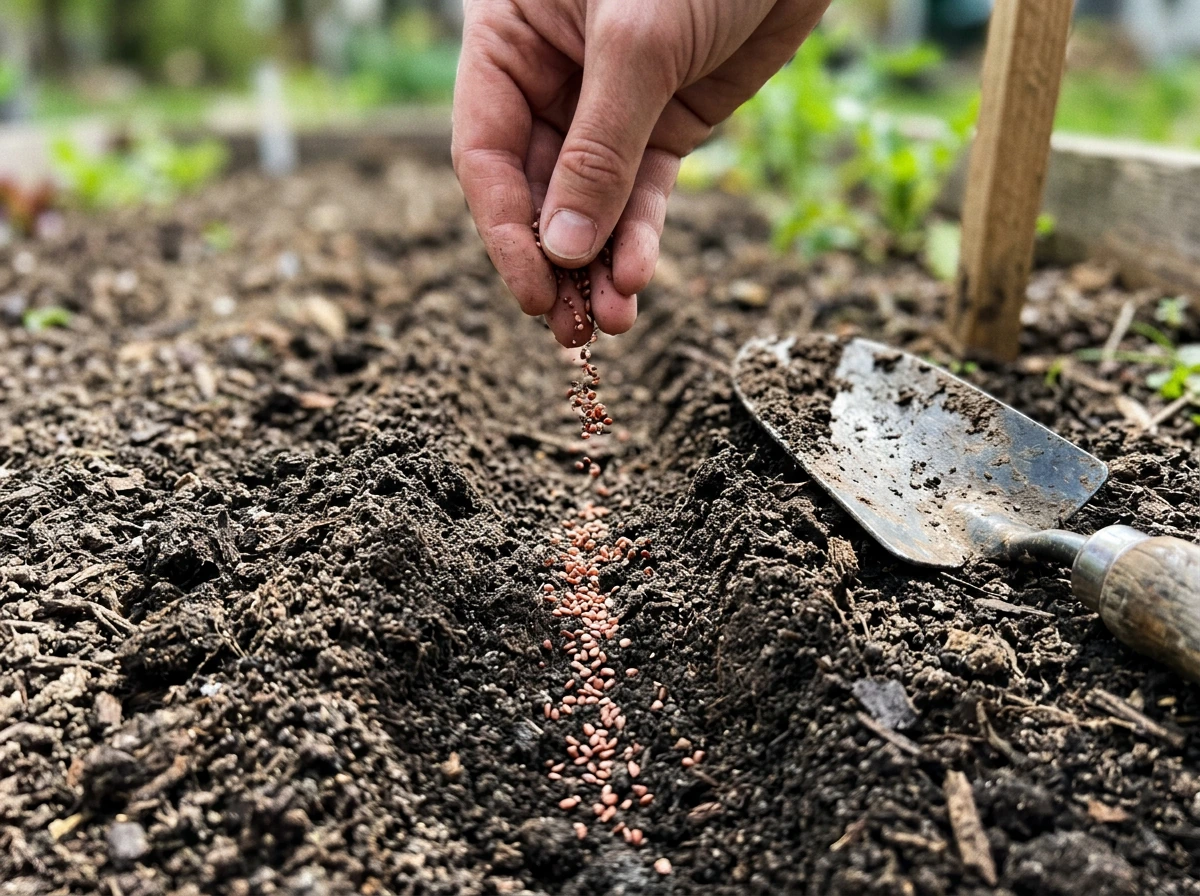
Direct sowing is the most common approach for leaf lettuce and works well in early spring. Sow seeds at a depth of about 1/8 to 1/4 inch and only cover them lightly with soil. This is important: lettuce seed needs light to germinate, so burying it too deep will dramatically reduce your germination rate. In rows, sow 4 to 6 seeds per inch with rows at least 2 inches apart. Once seedlings emerge and are an inch or two tall, thin leaf lettuce to about 6 inches between plants. Head-type lettuce needs more room, so thin those to about 12 inches. Do not skip thinning. Crowded plants compete for resources, reduce airflow, and become disease-prone.
Starting Transplants
If you want a head start or want to extend your season, start seeds indoors 4 to 6 weeks before your outdoor planting date. Use a shallow tray or cell pack with good-quality seed-starting mix, lightly press seeds into the surface, and keep the mix moist and in a location with good light. Harden off transplants over about a week by setting them outside for a few hours each day before planting them into the garden. Space transplants at the same distances as thinned seedlings: 6 inches for leaf types, 12 inches for head types.
Soil, Water, and Light: The Conditions Lettuce Needs
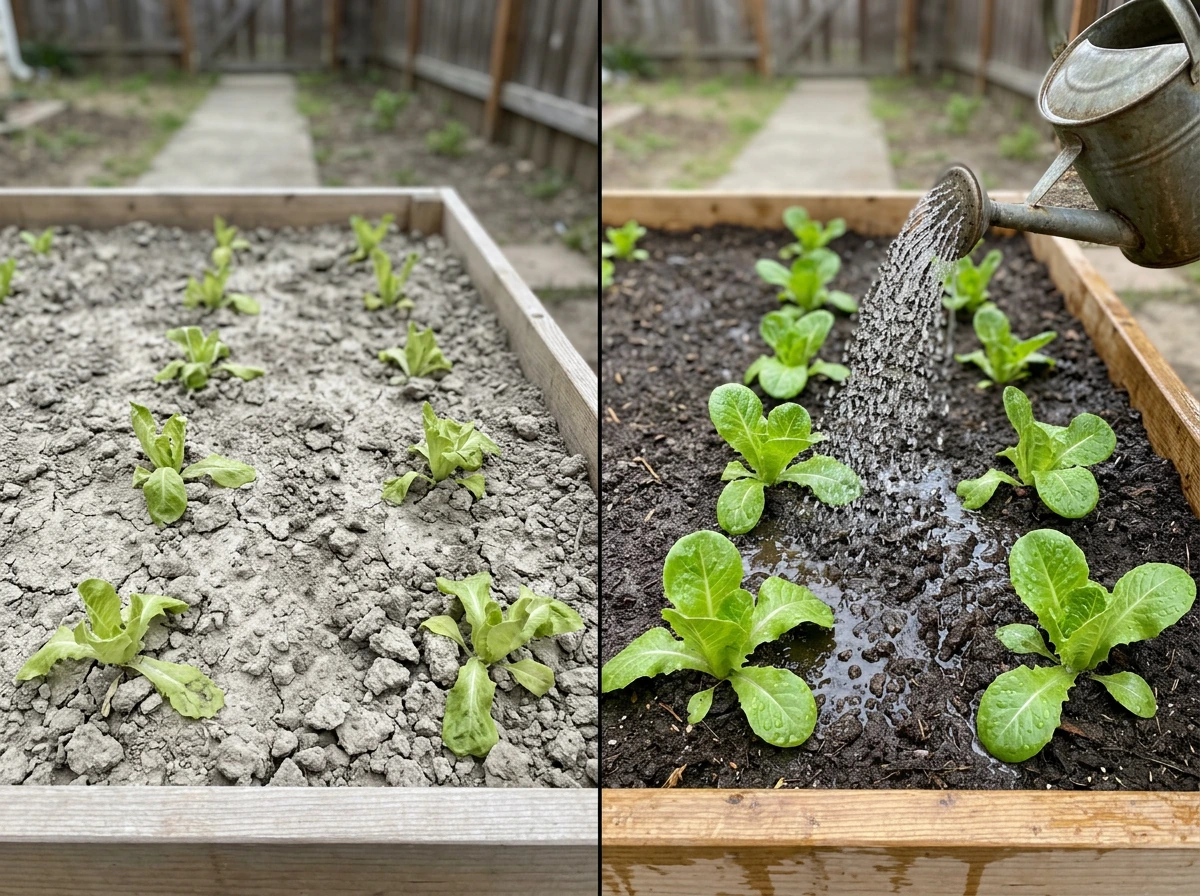
Lettuce is not fussy, but it does have a few clear preferences. Get these right and the plant practically grows itself.
- Soil pH: Aim for 6.0 to 6.5. A basic soil test from your local extension office will confirm whether you need to adjust with lime or sulfur.
- Soil texture: Lettuce likes a loose, well-draining seedbed. Work in compost before planting to improve both drainage and water retention in heavier soils.
- Watering: Keep the soil consistently moist but never waterlogged. Drip irrigation or soaker hoses are ideal because they water at the base of the plant and keep foliage dry, which significantly lowers the risk of downy mildew.
- Light: Full sun in spring (at least 6 hours per day). Partial afternoon shade becomes helpful in late spring and early summer when temperatures climb.
- Temperature: Ideal daytime range is 60 to 65°F. Once daytime temps regularly exceed 75 to 80°F, lettuce quality drops and bolting becomes likely.
One thing that trips up new growers is overwatering vs. underwatering. Lettuce needs consistent moisture, not wet feet. If your soil is well-draining, water regularly (every 1 to 2 days in warm weather, every 2 to 3 days in cool weather) and check by pressing a finger an inch into the soil. If it feels dry, water. If it still feels moist, wait.
Ongoing Care, Heat Problems, and Common Pests
Bolting and Heat Stress
Bolting is when your lettuce sends up a flower stalk, which makes the leaves bitter and ends the harvest. It is triggered by heat and long days. The best prevention is timing: plant early and harvest before heat peaks. If a warm spell hits, shade cloth or moving container-grown plants to a shadier spot can buy extra days. Once you see the center of the plant rising and elongating, harvest everything immediately rather than letting it bolt fully.
Tipburn
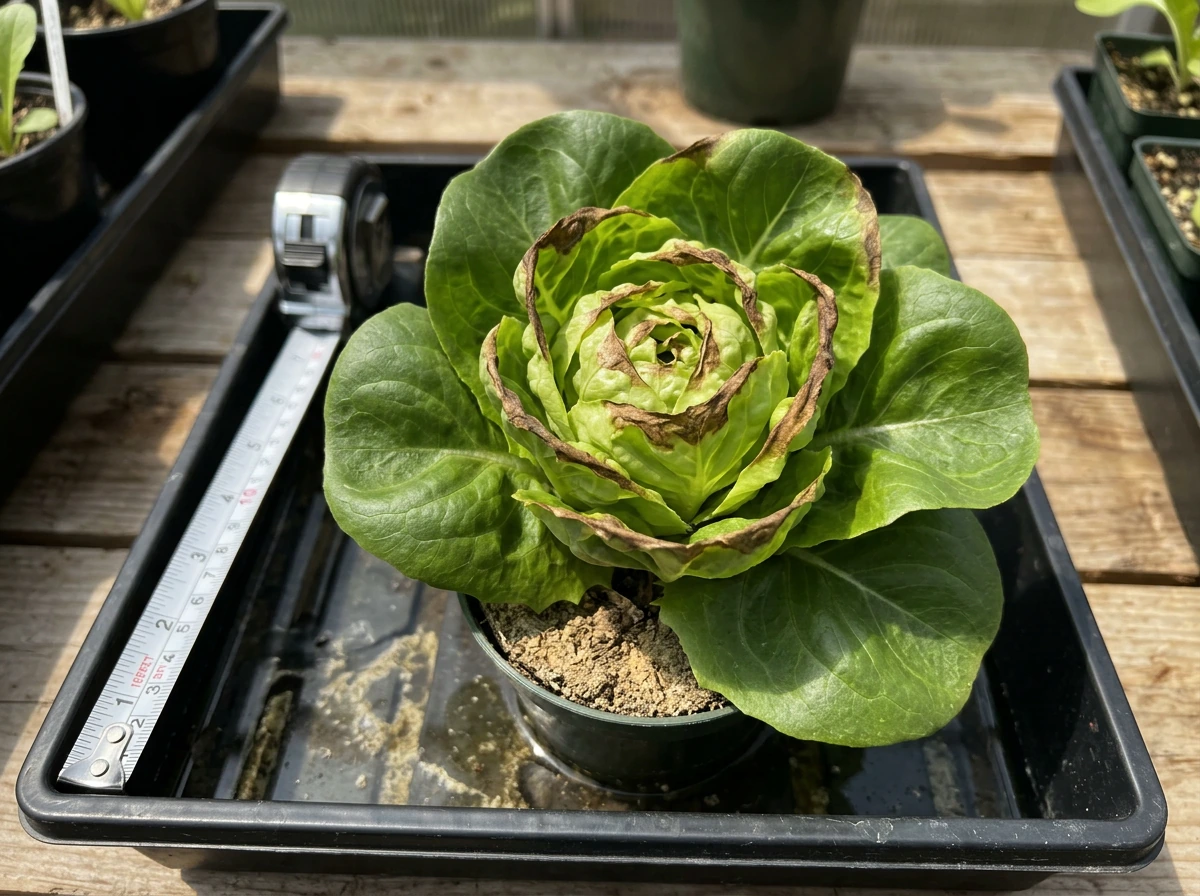
Tipburn shows up as browning or dying leaf edges, especially on inner leaves. It looks like a nutrient deficiency but is almost always caused by water stress, not low soil calcium. What happens is that during rapid growth, calcium cannot move fast enough into the outermost expanding tissue when water movement through the plant is inconsistent. Keeping watering steady and avoiding drought periods followed by heavy watering reduces tipburn significantly. In most cases, you do not need to add calcium supplements.
Pests and Disease
The two biggest problems for home lettuce growers are downy mildew and insect feeding. Downy mildew appears as pale yellow spots on upper leaf surfaces with grayish-white fuzz underneath. Prevent it by using drip irrigation (keep leaves dry), spacing plants properly for airflow, and avoiding poorly drained sites. For insects, the main culprits are aphids, slugs, and cabbage loopers. Check the undersides of leaves regularly. Hand-pick caterpillars, use insecticidal soap for aphids, and set out beer traps or diatomaceous earth for slugs.
How to Harvest Lettuce (and Keep It Producing)
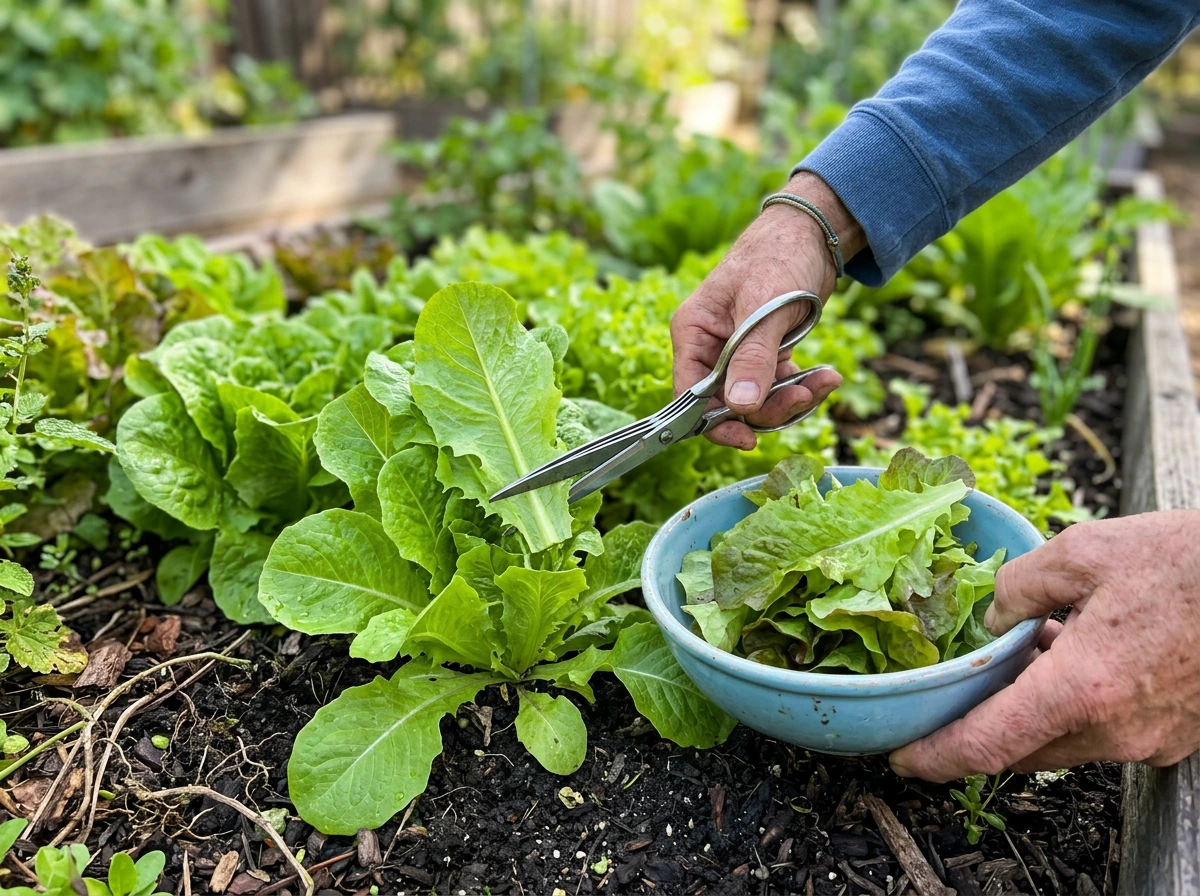
How you harvest depends on the type of lettuce you are growing, and getting this right is the difference between a plant that keeps producing for weeks and one that stops after a single cut.
| Lettuce Type | When to Harvest | How to Harvest | Does It Regrow? |
|---|---|---|---|
| Loose-leaf | 30–45 days from seed; once outer leaves are 3–4 inches long | Cut or snap outer leaves; leave the central crown intact | Yes, repeatedly |
| Butterhead | 55–70 days; when a soft, loose head forms | Cut the whole head at the base, or harvest outer leaves first | Sometimes; often harvested all at once |
| Romaine | 60–75 days; when leaves are upright and full | Cut outer leaves, or harvest the whole head when firm | Yes, if crown is left |
| Crisphead (Iceberg) | 70–85 days; when head feels firm and dense | Cut the whole head at the base | No; single harvest |
For leaf lettuce specifically, the cut-and-come-again method is your best friend. Use clean scissors or a knife to cut outer leaves about an inch above the soil line, leaving the growing point (the central crown) fully intact. The plant will push out new leaves from the center within 7 to 10 days. Never cut more than one-third of the plant at a time. This approach can extend your harvest window by 4 to 8 weeks compared to pulling the whole plant.
Harvest in the morning when leaves are most hydrated and crisp. Rinse immediately and refrigerate in a damp paper towel inside a bag or container. Fresh-picked leaf lettuce holds well for 5 to 7 days in the fridge.
Keeping the Harvest Going: Succession Planting and Replanting
The single best trick for continuous lettuce all season is succession planting: sowing a small new batch of seeds every 2 to 3 weeks rather than sowing everything at once. Each planting matures a few weeks after the previous one, so you always have leaves coming in while earlier plants are still producing or being finished off. University of Saskatchewan research on succession planting confirms this is the most effective way to extend harvest through the full season for short-season crops like lettuce.
When a plant bolts or becomes too bitter, pull it and replant immediately. In mid-to-late spring, direct sow into the same spot. As summer heat arrives, switch to heat-tolerant varieties like 'Jericho' romaine or 'Nevada,' which are bred to resist bolting. In late summer (about 8 to 10 weeks before your first fall frost), start a fall succession for a second season of fresh lettuce.
If you are growing in containers, moving pots to shadier spots as summer heats up can push your growing season weeks further than an in-ground bed exposed to full afternoon sun. This flexibility makes container growing a great complement to a main garden bed.
Your Action Plan Starting Today
- Choose a leaf lettuce variety suited to spring (Black-Seeded Simpson, Red Sails, or a mesclun blend are all great starting points).
- Prepare a bed or container with loose, well-draining soil, amended with compost. Test or adjust pH to 6.0–6.5 if needed.
- Direct sow seeds 1/8 to 1/4 inch deep, barely covering them. Sow 4 to 6 seeds per inch in rows 2 or more inches apart.
- Water gently and keep soil moist. Set up drip or soaker irrigation if possible to keep foliage dry.
- Thin seedlings to 6 inches apart once they are 1 to 2 inches tall. Do not skip this step.
- Plan your first succession sowing for 2 to 3 weeks from today so you have a continuous supply coming in.
- Begin harvesting outer leaves when they reach 3 to 4 inches long, leaving the crown untouched.
- Watch for bolting as temperatures rise. When it starts, harvest everything remaining and replant with a heat-tolerant variety.
That is really the whole loop. The plants will tell you when something is off (pale leaves mean nutrient issues, brown edges mean water stress, bitter taste means heat is building), and once you have grown a round or two you will read those signals instinctively. Start with leaf lettuce, keep the soil moist and cool, harvest outer leaves early and often, and you will have a continuous supply of fresh greens from now through early summer with barely any effort.
FAQ
How do I know if I should water lettuce more or less?
Aim for soil that stays evenly moist, not saturated. If you are unsure, lift the corner of mulch or press a finger 1 inch deep, then water only if the soil feels dry. For many gardens, watering early in the day reduces leaf wetness later. Also, use a drip hose or soaker so the soil gets moisture while leaves stay drier, which helps prevent downy mildew.
Can I grow lettuce from transplants instead of direct seeding?
Yes, but it changes your timing. Start seed indoors for a head start, then harden off by gradually increasing time outside over about a week so transplants do not stall from shock. Plant outdoors at the same spacing you would thin to (about 6 inches for leaf, 12 inches for heads) and keep soil evenly moist the first 10 to 14 days.
What is the best harvest method if I want lettuce to keep growing?
For leaf lettuce, the safest approach is the cut-and-come-again harvest, remove only outer leaves, and leave the central crown untouched. If you remove leaves too aggressively (more than about one-third at a time), growth slows and you may lose the second wave of leaves. For heads, harvest when the head feels firm, do not cut too early.
My lettuce is turning bitter, what should I do?
If lettuce develops bitter leaves, the cause is usually bolting triggered by heat and long days rather than a lack of fertilizer. Shift to earlier harvest, provide afternoon shade during warm spells, and keep the plants consistently watered. If a warm spell hits and the center starts rising, harvest immediately and remove the bolting plant to make room for the next succession planting.
Do I need to fertilize lettuce, and what if it shows tipburn?
Most lettuce grown in cool seasons is fine with minimal feeding. When you do fertilize, choose a balanced fertilizer and avoid heavy nitrogen pushes that create lush, disease-prone foliage. If tipburn is the issue, do not automatically add calcium, focus instead on smoothing out watering gaps so the plant can transport nutrients into expanding leaf edges.
Is thinning lettuce really necessary, and what happens if I skip it?
Thin right away and thin based on final spacing. Crowded plants create low airflow, which increases disease pressure and keeps soil drier around roots, even when the surface feels wet. If thinning feels hard, treat it as non-negotiable for airflow, and consider sowing slightly lighter so you can thin less aggressively.
Can I grow lettuce in containers, and how does it change my care?
Cool-season lettuce often grows well in containers, and the main advantage is temperature control. During hot spells, move pots to partial shade to slow bolting, and keep containers consistently moist because pots dry faster than garden beds. Containers also make it easier to avoid poorly drained spots that can worsen mildew.
How can I tell whether my lettuce problem is disease or insects?
Look at leaf symptoms to choose an action. Pale yellow spots on top surfaces with grayish growth underneath suggest downy mildew, respond by improving airflow and keeping leaves dry (drip irrigation helps). If you see chewed edges, holes, or slug trails, that points to insects, then check leaf undersides frequently and use appropriate controls like hand-picking caterpillars or slug deterrents.
How do I schedule plantings so I have lettuce all season?
Use lettuce succession planting, with a small new sowing every 2 to 3 weeks, and start fall succession about 8 to 10 weeks before the first fall frost. If spring is already warm, switch to heat-tolerant varieties like ‘Jericho’ or ‘Nevada’ and keep the harvest cycling by removing bolting plants promptly and re-sowing in the same spot.
My lettuce seeds didn’t sprout, what are the usual reasons?
If seeds do not germinate, the most common causes are sowing too deep (lettuce needs light) and soil temperatures outside the ideal range. Keep seed depth around 1/8 to 1/4 inch, avoid covering too heavily, and check soil temperature so you plant when it is roughly in the 60 to 80°F range. If it is too hot, wait or use temporary shade until conditions cool.